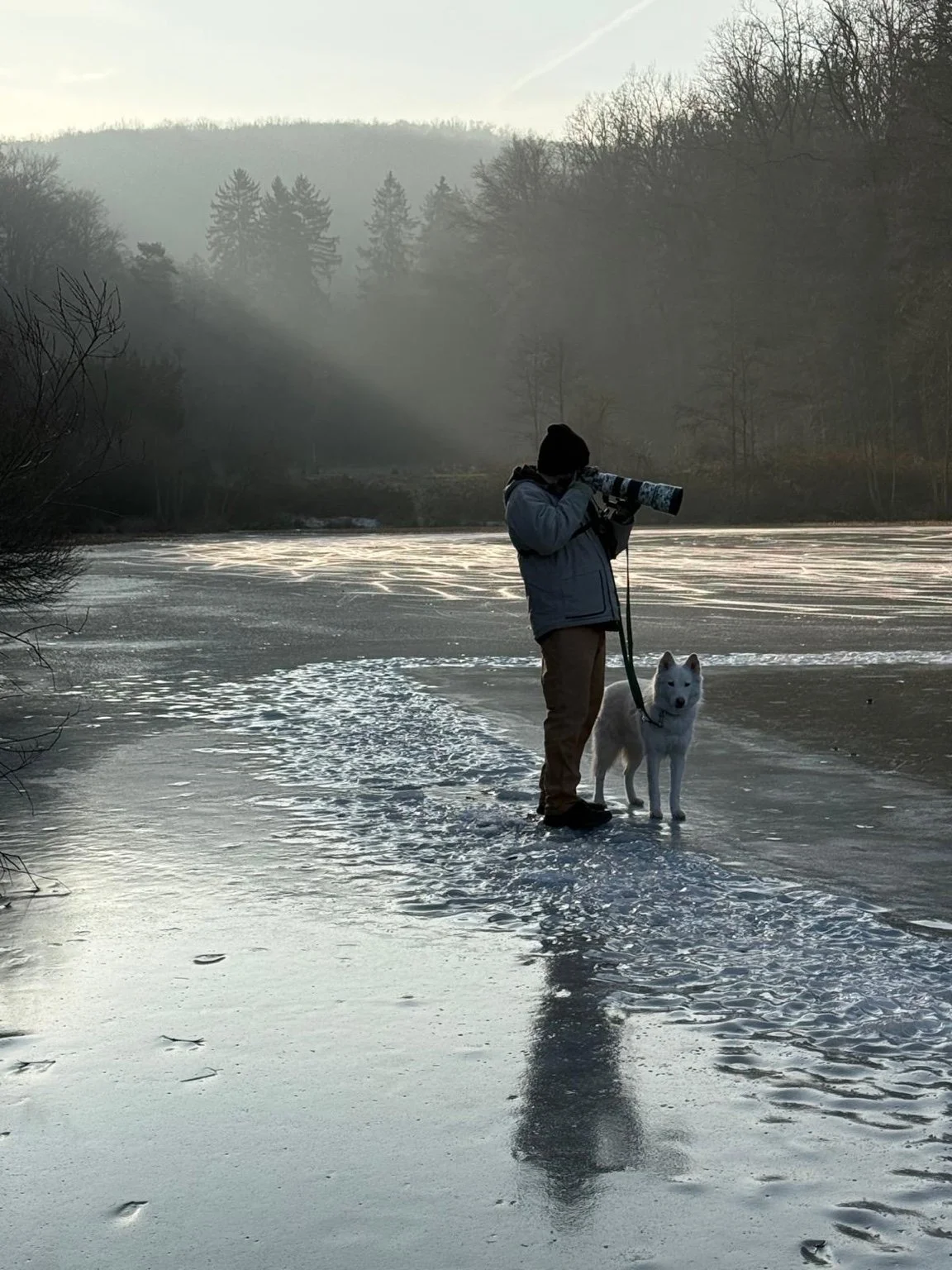
About Joseph Hubbard
I am a fine-art wildlife and documentary photographer based in Germany, focused on ethical field work and environmental storytelling.
My work is grounded in patience, repetition, and long-term observation. Rather than pursuing staged or high-volume imagery, I return to landscapes and habitats over time — studying seasonal shifts, light patterns, and animal behavior until an image forms naturally. The process is intentional and minimally invasive, with respect for wildlife and the integrity of place guiding every decision.
Following medical retirement from the U.S. Army in 2014, I turned to photography as a disciplined and structured way to remain engaged with the natural world. Working independently and within defined limits has shaped a quieter, more deliberate approach — fewer outings, greater attention, and stronger narrative cohesion.
My images explore coexistence, habitat change, and the tension between human presence and natural systems. Each body of work develops as part of an ongoing visual study rather than isolated moments.
Finished photographs are presented as archival fine-art prints and licensed for editorial, conservation, and documentary use.
Nature remains both subject and framework — where observation becomes clarity, and patience becomes part of the work itself.
My Approach
Coexistence over interference.
The way I work is simple.
I don’t stage wildlife. I don’t push closer for the sake of impact. I allow space — for animals, for landscapes, and for the moment to unfold on its own terms.
I work at ethical distances and avoid practices that alter natural behavior. Natural light is my preference, and my physical footprint in sensitive areas is kept minimal. Permissions, landowners, and regional regulations are respected as part of the responsibility that comes with documenting these places.
I’m not interested in collecting images.
I’m interested in understanding what I’m witnessing and sharing it with others.
Most of my work develops slowly — through return visits, observation, and restraint. The image comes last. The process comes first.